Why Carroll Gardens Continues to Hold Value in a Shifting Brooklyn Real Estate Market
Brooklyn real estate has never been a one-size-fits-all market. As a Brooklyn native, I’ve watched neighborhoods rise, cool, and recalibrate at different speeds—often moving independently of the broader headlines.
And right now, as the market continues to shift in 2026, one neighborhood stands out for its consistency: Carroll Gardens.
While national and local publications like The Wall Street Journal, The New York Times, and The Real Deal continue to report on cooling demand, pricing adjustments, and longer days on market across New York City, Carroll Gardens is telling a different story—one rooted in fundamentals.
A Market Defined by Scarcity
One of the most important drivers of value in real estate is supply—and in Carroll Gardens, supply remains extremely limited.
Unlike neighborhoods experiencing waves of new development, Carroll Gardens is defined by:
- Landmark-protected brownstone blocks
- Low-density zoning
- Minimal new construction opportunities
This isn’t a neighborhood where inventory can suddenly expand to meet demand. The physical constraints of the neighborhood create a natural ceiling on supply.
And when supply is constrained, pricing tends to stabilize—even when broader market conditions soften.
This is something we’ve seen echoed in coverage from The Wall Street Journal, where limited housing inventory continues to play a major role in supporting home values nationwide.
The Power of End-User Demand
Not all buyer pools behave the same way.
In many parts of Brooklyn, investor activity and short-term ownership cycles can amplify market swings. But Carroll Gardens operates differently.
Buyers here tend to be:
- Families planning long-term ownership
- Professionals seeking neighborhood stability
- End-users prioritizing lifestyle over speculation
This creates a more stable demand base—one that is less sensitive to short-term interest rate fluctuations or market sentiment shifts.
According to reporting from The New York Times, neighborhoods with strong end-user demand often experience softer corrections during downturns because homeowners are less likely to sell under pressure.
In Carroll Gardens, that dynamic is clearly visible.
Historic Character That Can’t Be Replicated
There’s also something intangible—but incredibly powerful—at play: authenticity.
Carroll Gardens is known for:
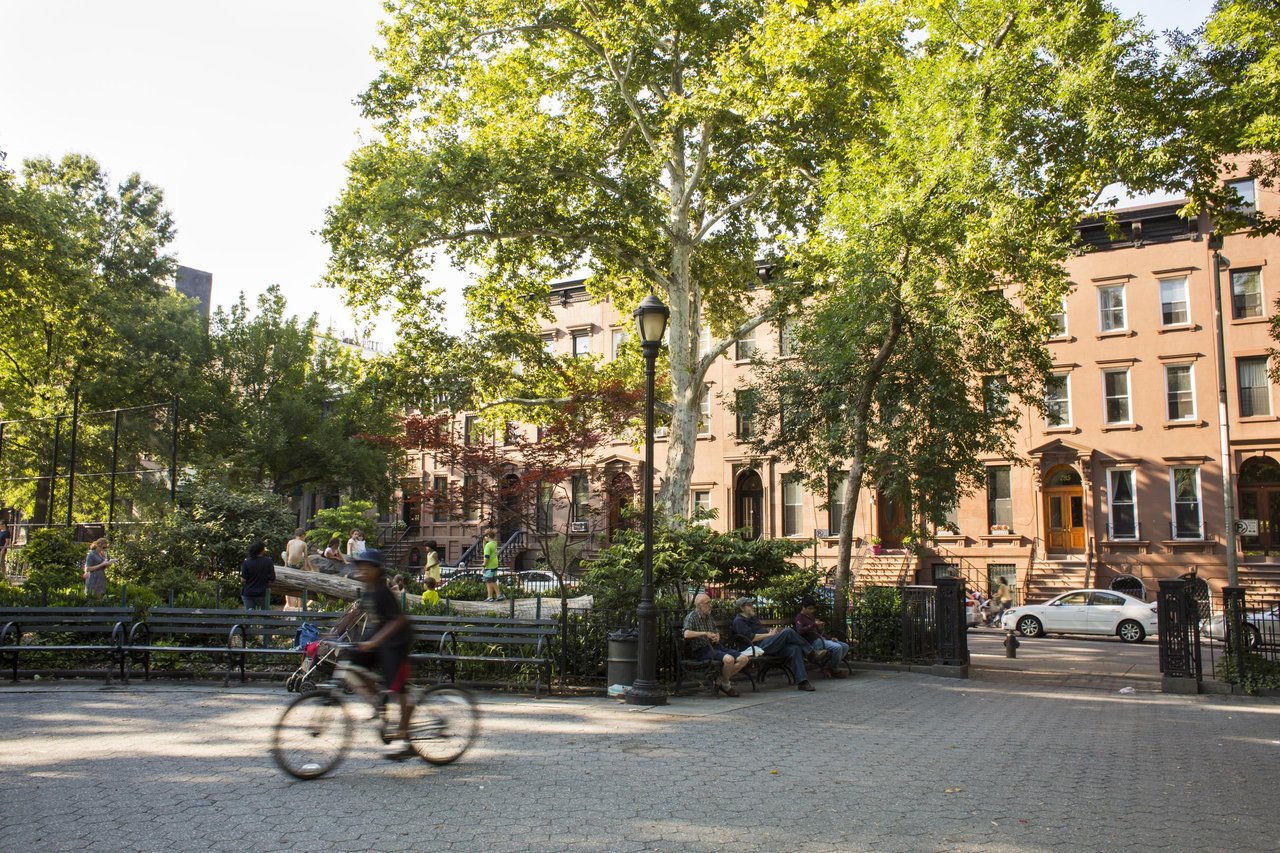
- Deep front gardens that create a unique streetscape
- 19th-century brownstones with preserved architectural detail
- Tree-lined blocks that feel distinct from the rest of Brooklyn
These are features that new developments simply cannot replicate.
While modern buildings may offer amenities, they often lack the character and historical depth that define Carroll Gardens. And in real estate, uniqueness drives long-term desirability.
As The Real Deal frequently highlights, properties with irreplaceable characteristics tend to maintain stronger value positioning—even during market adjustments.
Why Carroll Gardens Doesn’t Follow the Headlines
One of the biggest mistakes buyers and sellers make is relying too heavily on national headlines to guide local decisions.
The reality is:
- Real estate is hyper-local
- Each neighborhood reacts differently
- Market shifts are not evenly distributed
While headlines may suggest a cooling market across NYC, micro-markets like Carroll Gardens operate on their own supply-and-demand dynamics.
This is where experience matters.
As a former teacher, I always tell my clients:
Study the structure before reacting to the narrative.
In Carroll Gardens, the structure remains strong:
- Limited inventory
- Consistent demand
- High-quality housing stock
That combination creates resilience.
Stability Over Volatility
Carroll Gardens isn’t known for dramatic price spikes—and that’s exactly what makes it powerful.
Instead of rapid appreciation followed by sharp corrections, the neighborhood tends to experience:
- Gradual, steady growth
- Smaller fluctuations during downturns
- Long-term value preservation
This kind of performance appeals to buyers who are thinking beyond short-term gains.
And in today’s market, that mindset is becoming more common.
As interest rates, affordability, and economic conditions continue to evolve, buyers are prioritizing stability over speculation—a trend that has been widely discussed in both The Wall Street Journal and The New York Times.
What This Means for Buyers and Sellers
Understanding why Carroll Gardens remains resilient isn’t just an academic exercise—it has real implications for strategy.
For Buyers:
- Opportunities may be limited due to low inventory
- Competition remains strong for well-priced properties
- Long-term value potential remains high
For Sellers:
- Pricing still requires precision—this is not a peak market
- Proper positioning and marketing are critical
- Well-presented properties continue to attract serious buyers
In both cases, success comes from understanding the specific dynamics of the neighborhood—not just the broader market.
A Lesson in Market Discipline
As a tenor, I often think about real estate the same way I think about music.
A steady tone carries further than a dramatic one.
Carroll Gardens doesn’t surge unpredictably.
It doesn’t collapse under pressure.
It holds its line.
And in real estate, that kind of discipline is what builds long-term wealth.
Final Thoughts
Carroll Gardens continues to demonstrate what makes certain neighborhoods resilient—even in uncertain markets.
It’s not about hype.
It’s about fundamentals.
- Limited supply
- Strong end-user demand
- Irreplaceable housing stock
These are the factors that protect value over time.
And as Brooklyn continues to evolve, neighborhoods like Carroll Gardens will remain a benchmark for stability.
Work With a Brooklyn Real Estate Expert
If you’re considering buying or selling in Carroll Gardens—or anywhere in Brooklyn—understanding these micro-market dynamics is essential.
Visit 👉 https://petermancininyc.com to learn more, explore current opportunities, and develop a strategy tailored to your goals.
I’m Peter Mancini — delivering excellence in real estate.