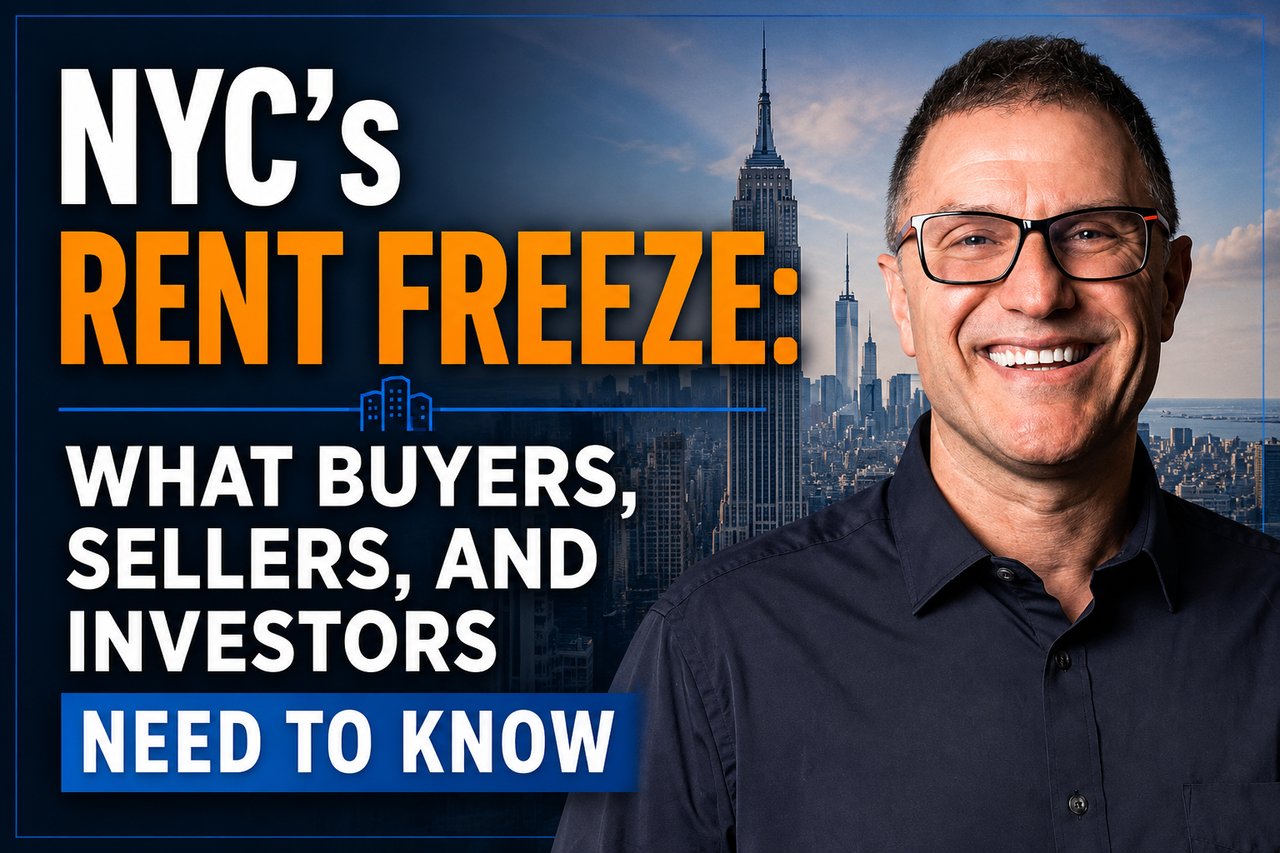
By Peter Mancini, Licensed Associate Real Estate Broker
Frances Katzen recently explored New York City's rent freeze in her latest Katzen Report, Issue 124: "The Freeze Heard Across New York." Her analysis highlights the policy's implications for the city's housing market and the broader conversation surrounding affordability.
Building on that discussion, I'd like to share my own perspective on what these policy changes may mean for buyers, sellers, investors, and homeowners—particularly here in Brooklyn. While the rent freeze directly affects rent-stabilized apartments, its impact is likely to extend well beyond the rental market, influencing purchasing decisions, investment strategies, and the future of New York real estate.
Every Policy Creates a Ripple Effect
Have you ever noticed that in an orchestra, changing one section's dynamics changes the sound of the entire performance?
As a former New York City music teacher and trained tenor, I learned that every musician influences the ensemble. Even if only one section changes, everyone else adjusts.
New York real estate works the same way.
A housing policy may target one segment of the market, but its effects rarely stop there. Buyers, sellers, landlords, investors, and homeowners all respond to changing conditions, creating ripple effects throughout the city's real estate landscape.
That's why understanding the broader picture matters.
What Is the Rent Freeze?
New York City's Rent Guidelines Board recently approved a two-year rent freeze for one- and two-year leases on rent-stabilized apartments.
For nearly one million New Yorkers living in rent-stabilized housing, the decision provides immediate financial relief during a time when affordability continues to dominate conversations throughout the city.
For many households, predictable housing costs offer peace of mind and make budgeting considerably easier.
From the tenant's perspective, those benefits are significant.
Looking at the Other Side
Like most issues in real estate, however, there is more than one perspective.
Owners of rent-stabilized buildings continue facing rising operating expenses, including:
- Property taxes
- Insurance premiums
- Labor costs
- Utility expenses
- Building maintenance
- Capital improvements
Many of these costs have increased substantially over the past several years.
For small property owners, particularly those managing older buildings throughout Brooklyn, balancing these rising expenses without additional rental income becomes increasingly challenging.
The question becomes whether buildings can continue receiving the investment necessary to remain safe, attractive, and well maintained over the long term.
The Real Challenge: Housing Supply
While much attention has focused on the rent freeze itself, I believe the larger issue remains housing supply.
New York simply doesn't have enough housing to meet demand.
When inventory remains limited and demand stays strong, affordability becomes increasingly difficult regardless of rent policy.
Long-term solutions will likely require continued investment in housing production, responsible development, and thoughtful planning that expands opportunities while preserving the character of our neighborhoods.
Supply remains one of the most important conversations in New York real estate.
What Buyers Should Consider
If you're planning to purchase a home, this policy probably won't change your transaction directly.
However, it may influence buyer behavior.
Some renters may begin asking whether homeownership provides greater stability than renting.
Owning a co-op, condominium, or single-family home offers something many buyers value: greater control over their housing future.
Monthly carrying costs may still fluctuate, but ownership also creates opportunities to build equity over time.
For many New Yorkers, that remains an attractive long-term strategy.
What It Means for Investors
For investors considering multifamily properties, the conversation becomes more financial.
Future revenue growth may become less predictable while operating expenses continue increasing.
That doesn't mean these properties stop being good investments.
It simply means investors must become even more disciplined when evaluating:
- Building financials
- Reserve funds
- Deferred maintenance
- Tenant mix
- Capital improvement needs
- Long-term operating costs
Today's underwriting requires greater attention to detail than ever before.
Considerations for Sellers
Owners of rent-stabilized and mixed-use properties may also experience changes in buyer expectations.
Purchasers are likely to spend additional time reviewing income statements, expenses, maintenance records, and future capital needs before making offers.
Properties that demonstrate strong management and transparent financial records may continue attracting qualified buyers despite increased market uncertainty.
Preparation has always mattered.
Today's market simply places an even greater premium on it.
Brooklyn Is Never Just One Market
One lesson I've learned throughout my career is that Brooklyn should never be viewed as one market.
Bay Ridge is different from Park Slope.
Windsor Terrace differs from Brooklyn Heights.
A co-op behaves differently than a condominium.
Investment properties operate under different market forces than owner-occupied homes.
That's why broad headlines rarely tell the entire story.
Understanding neighborhood trends, building type, pricing strategy, and buyer demand provides far more valuable insight than citywide averages alone.
Every transaction deserves local context.
New York Has Always Adapted
One reason I've always believed in New York real estate is because the city continually evolves.
Markets change.
Policies change.
Economic conditions change.
Yet New York continues adapting.
Every administration introduces new priorities, and every market cycle creates new opportunities.
Those who understand change rather than fear it are usually the ones best positioned to make informed real estate decisions.
Final Thoughts
Housing is more than an economic issue.
It's about families finding stability.
It's about investors evaluating opportunity.
It's about property owners maintaining buildings.
And it's about creating neighborhoods where people want to live for generations.
The rent freeze has sparked an important conversation that extends well beyond rent-stabilized apartments.
Its effects will likely influence buyer psychology, investment decisions, and housing policy discussions for years to come.
Whether you're buying your first home, selling a property, or evaluating an investment, understanding how policy affects the broader market can help you make better decisions.
Real estate is rarely about reacting to headlines.
It's about understanding the trends behind them.
As always, my goal is to help you navigate those changes with confidence.
Clarity You Can Act On. Results You Can Trust.
Acknowledgment
This article was inspired by Frances Katzen's Katzen Report, Issue 124: "The Freeze Heard Across New York." While her report explores the policy from a broader New York City perspective, the opinions and analysis presented here are my own and are intended to provide additional insight for buyers, sellers, and investors, with a particular focus on the Brooklyn real estate market.