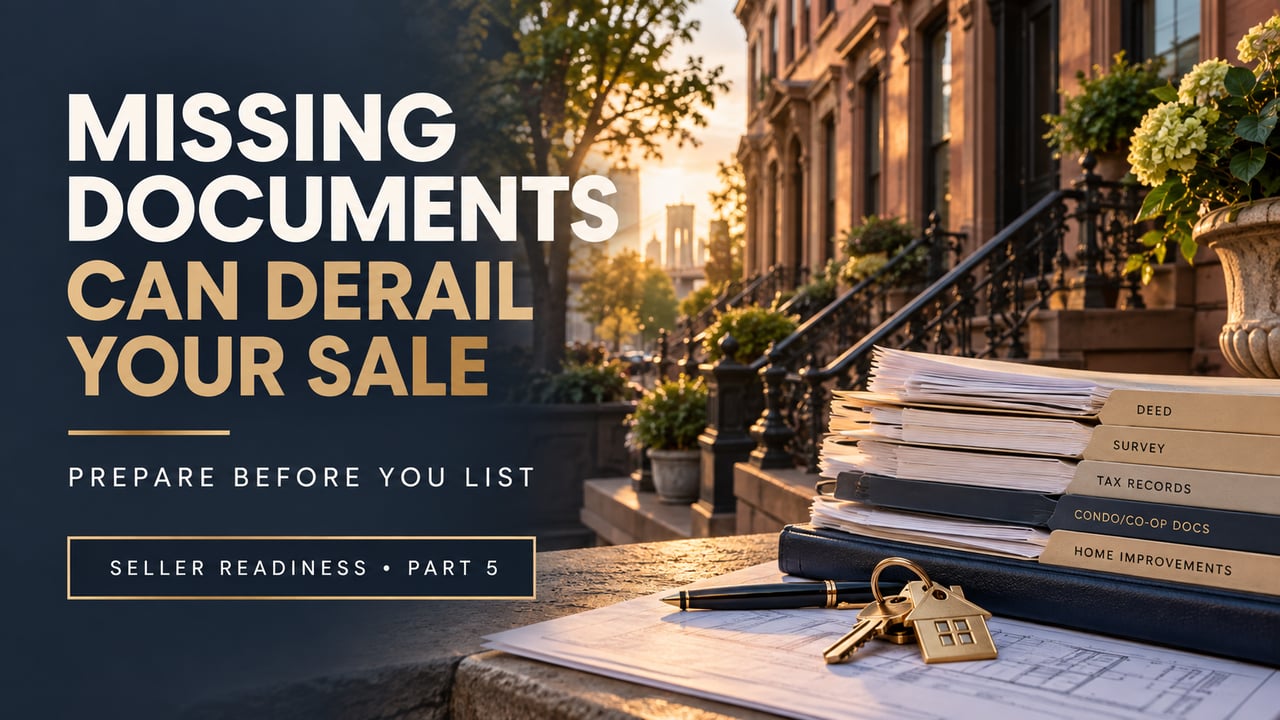
Missing Documents Can Derail Your Brooklyn Home Sale
Beautiful photographs attract buyers. Thoughtful staging creates an emotional connection. Strong marketing brings the right people through the door. But once a buyer moves forward, interest must become confidence. That confidence depends on whether the property, its history, and its ownership can be documented clearly.
For Brooklyn homeowners, missing paperwork can slow a transaction, weaken leverage, or reveal a problem at the worst moment. Sellers do not need a perfect file. They should identify what they have, what may be missing, and who can help before a buyer is committed.
This is Part 5 of my Brooklyn Seller Readiness Series. During twenty-five years as a New York City music teacher and through my tenor training, I learned that a strong performance begins before the audience arrives. Quiet preparation determines how confidently everyone responds when the tempo changes.
Why Documents Matter Before You List
A transaction involves several people examining the same property. Attorneys review contracts and title issues. Buyers and lenders evaluate risk. Appraisers study value. Managing agents and boards review building information. Inspectors assess physical conditions. Incomplete or inconsistent records can multiply questions quickly.
The problem is rarely one missing page. The greater risk is timing. A question discovered early may be manageable. The same question found during contract negotiations, a rate lock, or a buyer’s moving plans can become disruptive.
Preparation creates room to think. It lets the appropriate professional review an issue without unnecessary pressure and helps your real estate advisor build a strategy based on facts.
Reporting from The Wall Street Journal, The New York Times, and The Real Deal shows how financing, insurance, regulations, and property conditions shape decisions. Market headlines matter, but individual deals depend on details. Sellers cannot control the market, but they can improve readiness.
Documents for a Brooklyn Co-op Sale
Selling a co-op is different from selling real property outright. The purchaser generally buys shares in a corporation with a proprietary lease, and the building has its own policies, finances, and approval process.
Useful records may include the proprietary lease, stock certificate information, maintenance statements, financial statements, bylaws, house rules, insurance information, board requirements, alteration agreements, and renovation records.
Sellers should also understand whether there are current or planned assessments, flip taxes, sublet restrictions, financing limits, transfer fees, or other policies that may affect a buyer. Some of this information comes from the managing agent rather than the shareholder’s personal files. The goal is not to collect random paperwork. It is to determine who holds each record and how long obtaining it may take.
If the original stock certificate or proprietary lease cannot be located, tell your attorney early. Replacing documents may require affidavits, indemnification, fees, lien searches, or coordination with the managing agent and lender. The correct process depends on the circumstances, which is precisely why waiting until closing approaches can create avoidable stress.
Documents for a Brooklyn Condo Sale
A condominium owner holds real property, but the building’s records still matter. Buyers and lenders may want to understand the condominium’s finances, insurance, rules, litigation, assessments, reserve position, and any projects that could affect ownership costs.
Relevant materials may include the deed, offering plan and amendments, common-charge statements, recent financial statements, bylaws, house rules, insurance documentation, alteration records, and information about assessments or capital projects. Your managing agent may provide a resale package or questionnaire that answers many building-level questions.
Renovations deserve special attention. If walls were moved, plumbing was relocated, electrical work was completed, or another significant alteration occurred, gather the agreements, permits, approvals, signoffs, plans, and contractor information you possess. Do not assume that work completed years ago will never become a question. Identify the available record and let the appropriate professionals determine what matters.
Documents for a Brooklyn House
Brooklyn houses have their own histories. A brownstone, limestone, rowhouse, or detached property may have been altered by multiple owners over many decades. The current layout does not always tell the complete legal or administrative story.
Potentially relevant records include the deed, title information, mortgage or lien details, certificate of occupancy, permits, surveys, tax records, leases, warranties, repair invoices, and documentation for major systems. Sellers may also need information about boilers, roofs, electrical service, plumbing, sewer lines, solar installations, oil tanks, or other property components.
A two-family home being used as a one-family, a finished basement, an extension, a converted garage, or an additional kitchen may prompt questions about legal use and permits. The right response is not to guess or make broad assurances. It is to assemble the known facts and consult the seller’s attorney or other qualified professional.
If tenants occupy the property, leases, payment records, security-deposit information, notices, and other documentation may be important. New York housing rules are complex and can change, so legal questions should be directed to an attorney experienced in the relevant area. Seller readiness is not a substitute for legal advice. It is the process that helps legal advice arrive early enough to be useful.
When Ownership Adds Another Layer
Some sales are complicated less by the property than by the ownership structure. Estate sales, trusts, divorces, partnerships, multiple owners, powers of attorney, and guardianships may require additional documents or court involvement.
An estate may need death certificates, wills, letters testamentary or letters of administration, tax information, and proof that the person signing has authority. A trust sale may require review of the trust agreement and trustee powers. A divorce may involve settlement terms or judgments affecting the property. When several people own a home, every necessary decision-maker must be identified and aligned.
These situations are not automatically deal breakers. They require time, coordination, and the proper guidance. Finding an authority issue after accepting an offer can create delay and uncertainty. Raising it before the property enters the market gives the seller’s attorney an opportunity to establish a path forward.
Build a Seller Document Inventory
Begin with a simple inventory. Create three categories: documents you have, documents you may need, and questions requiring professional review. Then assign each missing item to the person most likely to obtain or evaluate it.
Your managing agent may control building records. Your attorney may review title, ownership, leases, liens, estate authority, or contract concerns. Your accountant may help with tax questions. An architect or expeditor may investigate permits, plans, occupancy records, or agency filings. Your real estate advisor can coordinate the process and explain how specific issues may affect positioning, timing, and buyer expectations.
Keep digital copies in clearly labeled folders, but retain originals when required. Avoid emailing sensitive financial, identity, or ownership documents casually. Ask your professionals how information should be stored and transmitted securely.
Preparation Strengthens Your Position
Early document preparation does not guarantee a flawless closing. Real estate transactions involve people, institutions, deadlines, and conditions no seller can fully control.
With better information, you may decide to correct an issue, obtain a missing record, adjust the listing timeline, clarify marketing language, prepare a disclosure, or price with a known condition in mind. You can answer buyer questions with greater consistency and reduce the chance that uncertainty becomes leverage against you.
That is the difference between reacting under pressure and moving with a plan. In music, preparation does not eliminate every surprise during a performance. It gives the performer the foundation to recover, adjust, and continue with confidence. Selling a Brooklyn home works much the same way.
Before focusing entirely on photographs, staging, and launch day, take time to examine the paperwork behind the property. Collect what you already have. List what appears to be missing. Identify the right professionals. Ask questions before the transaction is moving at full speed.
If you are considering selling a co-op, condo, or house in Brooklyn, comment READY or contact me for the Brooklyn Seller Readiness Checklist. It will help you begin organizing the decisions, documents, and conversations that support a more prepared sale.
I’m Peter Mancini, providing Clarity You Can Act On. Results You Can Trust.