Wondering whether a Brooklyn Heights townhouse really stands apart from other classic brownstone neighborhoods? If you are comparing Brooklyn blocks with an eye on architecture, setting, price, and daily lifestyle, the answer is yes, but not always in the way people expect. Brooklyn Heights offers a different mix of historic scale, waterfront access, and rarity than Park Slope or Carroll Gardens, and understanding those differences can help you shop or sell more strategically. Let’s dive in.
Brooklyn Heights Has a Different Historic Feel
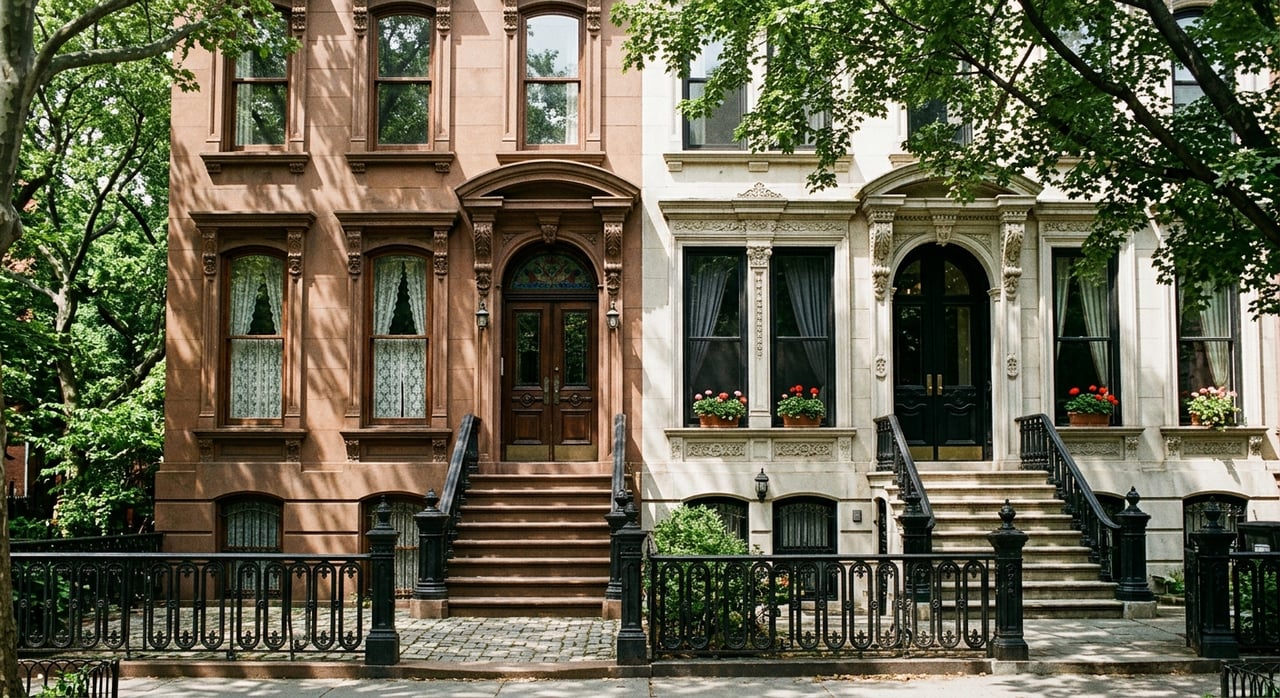
Brooklyn Heights is not just a collection of brownstone blocks. It is a historic district designated in 1965, with a streetscape that still reads as largely 19th century, according to the New York City Landmarks Preservation Commission.
That matters because the neighborhood has more variety than many buyers first assume. You will find stately brick and brownstone houses, stone sidewalks, and a broad range of architectural styles, including Federal, Greek Revival, Gothic Revival, and later rowhouse forms.
The block-by-block experience also changes within the neighborhood. The LPC points to larger houses on Pierrepont, Remsen, and Columbia Heights, while side streets like Willow, Hicks, Joralemon, Orange, Pineapple, and Clark tend to have smaller houses.
For a buyer, that means Brooklyn Heights feels layered rather than uniform. For a seller, it means your townhouse may compete within a more nuanced micro-market than the phrase "Brooklyn brownstone" suggests.
How Brooklyn Heights Compares to Park Slope
Park Slope is one of the most common comparison points for brownstone buyers. It is also a landmarked historic district, and the Park Slope Civic Council describes the area as having a relatively uniform height and a strong "city of homes and churches" character.
Compared with Brooklyn Heights, Park Slope reads as a broader and more park-centered brownstone district. Its historic district now covers about 1,800 buildings, giving buyers a larger housing base and a deeper overall brownstone market.
Brooklyn Heights, by contrast, feels more compact and more tied to its historic district identity. The streetscape is varied, but the neighborhood often trades on pedigree, preserved character, and proximity to the waterfront.
Park Slope Offers More Park-Centered Scale
Prospect Park is the defining open-space anchor in Park Slope. NYC Parks lists it at 526.25 acres, which gives the neighborhood a very different outdoor identity than Brooklyn Heights.
If your priority is direct access to a major destination park, Park Slope may feel like the more obvious fit. If you prefer a townhouse setting connected to the waterfront and a more compact historic district, Brooklyn Heights often stands out.
Park Slope Has a Broader Housing Base
For buyers who want more choices, Park Slope's size can be a major advantage. A larger inventory base can mean more variation in block feel, house condition, and price points across the neighborhood.
That does not automatically make Brooklyn Heights less desirable. In fact, for some townhouse buyers, the tighter and more limited Brooklyn Heights setting is exactly the appeal.
How Brooklyn Heights Compares to Carroll Gardens
If Park Slope is the park-centered comparison, Carroll Gardens is the lot-depth comparison. The Carroll Gardens Historic District is known for long rows of low two- and three-story houses set back behind front gardens.
NYC Planning notes that an 1846 Brooklyn law required front yards of 33 feet 5 1/4 inches on the east-west streets that gave Carroll Gardens its name. That rule is a major reason the neighborhood feels so different from both Brooklyn Heights and Park Slope.
In Brooklyn Heights, the historic rowhouse fabric is more continuous and more stoop-to-sidewalk in feeling. In Carroll Gardens, the block face is more garden-forward, which creates a quieter and more intimate street wall.
Carroll Gardens Feels More Inward-Looking
Carroll Gardens has a compact residential identity shaped by those front yards. Its local park anchor, Carroll Park, is just 1.87 acres, so much of the neighborhood's outdoor character comes from the residential block pattern itself.
Brooklyn Heights offers a different kind of openness. Rather than front-garden depth, it leans on its elevated setting, tree-lined streets, and stronger access to major public spaces along the waterfront.
Brooklyn Heights Feels More Waterfront-Oriented
Brooklyn Heights has unusually strong amenity access for a townhouse district. Cadman Plaza Park serves the neighborhood with recreational space and a playground, while Brooklyn Bridge Park stretches 1.3 miles along the East River across 85 acres.
That combination gives Brooklyn Heights a lifestyle profile that is hard to duplicate. You get the historic townhouse setting, but you also get access to a major waterfront park system that shapes everyday living in a way many brownstone blocks do not.
Transit and Access Matter in the Comparison
For many townhouse buyers, the right neighborhood is not just about architecture. It is also about how easily you move through your day.
Brooklyn Heights is well served by nearby subway access, including A or C at High Street, 2 or 3 at Clark Street, and F at York Street, with additional access points tied to Brooklyn Bridge Park and ferry service at Pier 1 and Pier 6.
Park Slope is also highly transit-rich, with B, Q, 2, and 3 service, plus 4, 5, D, N, R, F, and G access in and around the neighborhood. That transit depth adds to Park Slope's appeal as a larger brownstone market.
Carroll Gardens feels more residential and inward-facing in this comparison. Its identity is less about a major transportation hub or a flagship regional park and more about its distinctive block pattern.
Pricing Shows the Difference in Scarcity
Broad neighborhood value indexes from May 31, 2026 show Carroll Gardens at $2,005,850, Park Slope at $1,567,629, and Brooklyn Heights at $1,464,428. These are neighborhood-wide indicators, not townhouse-only comparisons, but they still help frame the market.
Inventory was tight across all three neighborhoods, with 31 homes for sale in Carroll Gardens, 73 in Brooklyn Heights, and 137 in Park Slope. Limited supply continues to support pricing across all three areas.
Townhouse-specific pricing can tell a very different story, especially in Brooklyn Heights. PropertyShark reported a Brooklyn Heights median house sale price of $8.2 million in May 2026, compared with a Carroll Gardens median sale price of $2.4 million across 13 transactions.
That spread is important. It suggests that the most desirable Brooklyn Heights townhouse product can trade in a much higher bracket than broad neighborhood averages imply, especially when a rare and well-preserved house comes to market.
Why Brooklyn Heights Townhouses Can Command More
The value story in Brooklyn Heights is not just about square footage. It is about scarcity, setting, and the kind of house that rarely comes to market.
Landmark designation helps preserve the streetscape and subjects major alterations or new construction to Landmarks Preservation Commission review. In practical terms, that helps keep authentic townhouse inventory limited.
When you combine that scarcity with waterfront adjacency and strong historic identity, Brooklyn Heights often occupies a premium category for buyers looking for a certain version of Brooklyn living. It is less about generic brownstone appeal and more about a specific blend of prestige, preservation, and place.
What Buyers Should Focus On
If you are comparing Brooklyn Heights to Park Slope or Carroll Gardens, it helps to focus on the kind of lifestyle and housing stock you actually want rather than just the neighborhood name.
Ask yourself:
- Do you want a townhouse in a compact waterfront historic district?
- Do you want a broader brownstone market with direct access to a major park?
- Do you value deep front gardens and a quieter residential block pattern?
- Are you targeting a rare trophy townhouse or a wider set of options?
- How much does transit access shape your daily routine?
Brooklyn Heights tends to win on waterfront adjacency, historic pedigree, and the potential for highly prized townhouse inventory. Park Slope tends to win on park access and market depth. Carroll Gardens tends to win on intimacy, garden depth, and one of Brooklyn's most recognizable residential streetscapes.
What Sellers Should Keep in Mind
If you own a townhouse in Brooklyn Heights, the comparison set matters. Your property may not be best understood through broad neighborhood averages alone, especially if it has strong historic character, scale, or a prized location within the district.
A buyer looking at Brooklyn Heights is often not making a simple price-per-square-foot decision. They may be weighing block prestige, house width, preservation, proximity to the waterfront, and the rarity of the opportunity.
That is why positioning matters. In a market like this, accurate neighborhood-level storytelling and disciplined pricing strategy can shape how buyers understand value.
If you are thinking about buying or selling a brownstone in Brooklyn, working with a team that understands these micro-market differences can make the process much clearer. The Signature Team brings a neighborhood-first, advisor-style approach that helps you evaluate not just the house, but the block, the district, and the broader market context.
FAQs
How is a Brooklyn Heights townhouse different from a Park Slope brownstone?
- A Brooklyn Heights townhouse is typically part of a more compact waterfront historic district with varied house sizes and styles, while Park Slope offers a broader brownstone market centered around Prospect Park.
Why do Carroll Gardens brownstones feel different from Brooklyn Heights townhouses?
- Carroll Gardens is defined by unusually deep front yards created by an 1846 Brooklyn law, which gives its blocks a more garden-forward and inward-looking feel than Brooklyn Heights.
Are Brooklyn Heights townhouse prices higher than neighborhood averages suggest?
- They can be, because broad neighborhood value indexes do not fully capture the pricing of rare townhouse sales, and Brooklyn Heights had a reported median house sale price of $8.2 million in May 2026.
What makes Brooklyn Heights attractive for townhouse buyers?
- Brooklyn Heights combines landmarked historic character, access to Brooklyn Bridge Park and Cadman Plaza Park, and strong transit connections, which creates a distinctive townhouse lifestyle.
Is inventory tight in Brooklyn Heights compared with other brownstone neighborhoods?
- Yes, inventory is limited across these neighborhoods, and the research report noted 73 homes for sale in Brooklyn Heights versus 137 in Park Slope and 31 in Carroll Gardens as of May 2026.
What should a Brooklyn townhouse seller highlight when marketing a Brooklyn Heights home?
- A seller should highlight factors like historic character, block location, house scale, preservation, and waterfront adjacency, since buyers often value those traits strongly in Brooklyn Heights.