Buying your first brownstone in Carroll Gardens can feel exciting right up until the details start piling up. One house has a high stoop, another has a garden level, and a third looks like a single-family home but may be set up very differently on paper. If you want to buy with confidence, you need more than curb appeal. You need to understand how these homes were built, how they are legally classified, and which older-house issues deserve extra attention. Let’s dive in.
Why Carroll Gardens Feels Different
Carroll Gardens remains, at its core, a low-rise rowhouse neighborhood. New York City Planning describes it as an area made up mostly of three- and four-story single- and multi-family row houses with front yards, along with a smaller number of apartment buildings and accessory structures.
That front-yard detail matters. In the historic core east of Carroll Park, the deep front yards are one of the neighborhood’s defining 19th-century features. For first-time buyers, that means the block-by-block character you notice is not accidental. It is part of what makes Carroll Gardens stand out in Brooklyn’s brownstone market.
What “Brownstone” Means Here
In Carroll Gardens, “brownstone” is really a shorthand term, not a strict building type. The Landmarks Preservation Commission describes a mix that includes brownstone-faced houses, brick houses with brownstone trim, cast-iron details, and ornamental cornices.
That is why two homes on the same block can look similar at first glance but differ in materials, stoop height, roofline, and exterior detail. Much of the neighborhood was built quickly between the late 1860s and early 1880s, which helped create a notably consistent streetscape. At the same time, builders worked with the slope of the streets, so visually similar homes can still have meaningful differences.
Typical Brownstone Layouts to Expect
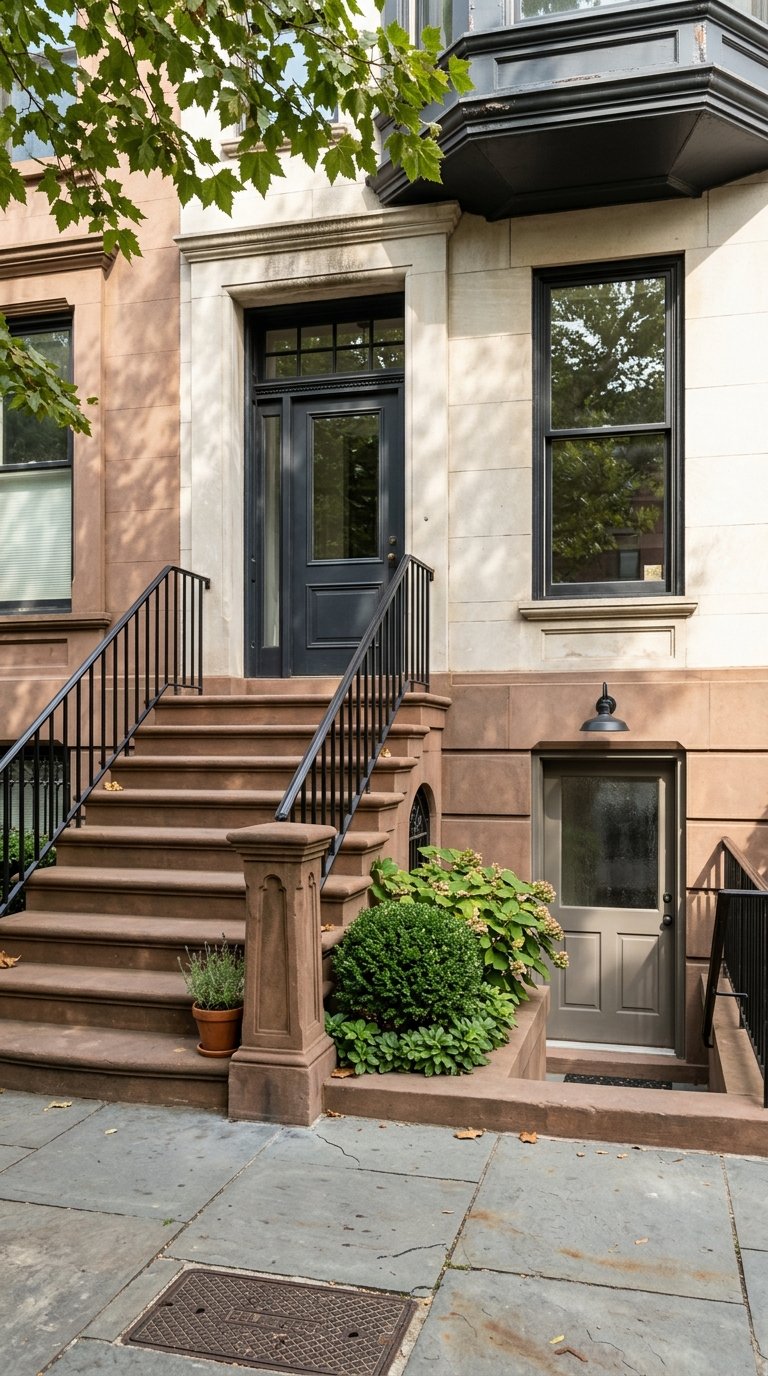
Many Carroll Gardens homes still follow the classic townhouse stack. You may see a raised or rusticated basement below the main floor, a parlor-floor entrance, upper-level bedrooms, and a rear yard.
You will also notice that entries are not always at sidewalk level. Historic examples in the district include high and low stoops, recessed doorways, and deep yard railings. For a first-time buyer, that means the lower level is often part of the story, but not always in the way the listing language suggests.
One-Family or Multi-Family Matters
A common mistake is assuming a home’s legal setup based on its exterior. In Carroll Gardens, the city’s rolling sales data includes one-family, two-family, and three-family properties, so legal unit count should always be confirmed through records.
This matters for how you plan to live in the house, renovate it, or finance it. A property may look like a classic single-family townhouse from the street while having a different legal occupancy history. Before you make an offer, you want to know exactly what you are buying.
Lower Levels Need a Closer Look
Because many Carroll Gardens houses sit above basements and have deep front or rear yards, lower-level spaces are often described as garden-level or basement-level areas. That can sound appealing, especially if you are hoping for extra living space, guest space, or flexible use.
Still, you should separate marketing language from legal and physical reality. Ceiling height, moisture conditions, means of egress, and legal use are all separate questions. A finished lower level is not automatically legal dwelling space just because it looks polished.
Legal Use Comes First
For first-time brownstone buyers, one of the most important due diligence steps is confirming legal use. The New York City Department of Buildings says the certificate of occupancy states the legal use and permitted occupancy of a building.
That said, many buildings constructed before 1938 may not have a certificate of occupancy unless later alterations changed the use, egress, or occupancy. In those cases, DOB records and floor-use records become especially important. If a townhouse has been converted, reconfigured, or subdivided over time, you want the paperwork to match how the home is being marketed and occupied today.
Landmark Status Can Affect Your Plans
Carroll Gardens is well known for its historic character, and that can shape what you can change after closing. If a home is inside the Carroll Gardens Historic District or is individually landmarked, most exterior changes to front and rear facades require review by the Landmarks Preservation Commission.
Some ordinary repair work, like replacing broken glass or repainting to match the existing color, usually does not require a permit. But larger exterior changes, including additions, demolition, new construction, or removing stoops or cornices, may require a Certificate of Appropriateness. If you are dreaming about a major exterior update, check those rules early.
Flood Risk Is Address-Specific
Flood exposure is another issue that first-time buyers should not gloss over. New York City’s flood-mapping tools are address-specific and are meant to help owners understand current and future flood hazards, along with possible flood insurance requirements.
This is especially relevant in a brownstone because the lower level is often the most exposed area of the house. Even if the rest of the home feels straightforward, the exact address can affect your comfort level, insurance planning, and renovation priorities.
Lead Paint Is Part of Older-Home Planning
Many Carroll Gardens homes were built long before 1978, which means lead-based paint should be part of your due diligence mindset. The EPA advises that many homes and apartments built before 1978 contain lead-based paint, and it recommends assuming lead may be present or hiring a certified inspector or risk assessor.
This matters even more if you plan to renovate soon after closing. Renovation, repair, and painting work can create lead dust, so projects in older homes should be handled by lead-safe certified contractors.
Ask About Heating Oil Tank History
Mechanical history matters just as much as visible charm. The New York State Department of Environmental Conservation notes that many underground home heating oil tanks are old enough to corrode and leak, and cleanup can become very expensive.
As part of your questions, ask whether the property ever had an underground tank, whether it was removed or left in place, and whether any remediation records are available. This is not a glamorous topic, but it is exactly the kind of issue that can shape your risk after purchase.
DOB Violations and Permit History Matter
Open violations and permit history should be part of your regular review for any older townhouse. The DOB notes that a certificate of occupancy cannot be issued if there are open applications or violations.
For a prewar Carroll Gardens property, that makes record review a standard part of smart due diligence. If work was done over time, you want to know whether it was properly filed, closed out, and aligned with the home’s legal configuration.
Questions to Answer Before You Offer
Before you move forward on a Carroll Gardens brownstone, try to answer these core questions:
- Does the legal use match how the home is currently marketed and occupied?
- Is the property located within the historic district?
- If it is landmarked, which exterior changes would require LPC approval?
- Is the lower level dry, properly documented, and consistent with the advertised use?
- Is the exact address in an area with flood exposure concerns?
- Was there ever an underground heating oil tank, and is the documentation complete?
- Are there open DOB violations, applications, or permit issues that still need resolution?
If you can answer those questions early, you will be in a much stronger position to compare homes clearly and avoid surprises later.
What First-Time Buyers Should Focus On
It is easy to fall for facade details, original trim, or a pretty stoop. Those features are part of what makes Carroll Gardens special, and they absolutely matter. But for a first-time buyer, the smarter approach is to balance charm with documentation and condition.
The main decision points in this neighborhood are often legal unit count, landmark status, and the condition of older lower-level and mechanical systems. When you understand those pieces, you can evaluate a home more like an informed owner and less like a nervous first-time shopper.
How a Local Advisor Helps
In a neighborhood like Carroll Gardens, small property details can have an outsized impact on your plans. Two houses may look nearly identical from the sidewalk while differing in legal setup, alteration history, and renovation flexibility.
That is why working with a neighborhood-first advisor can make the process feel much more manageable. When you have clear guidance on what to verify, what to ask for, and what might affect your long-term use of the property, you can move forward with more confidence and less guesswork.
If you are thinking about buying your first brownstone in Carroll Gardens, The Signature Team can help you understand the details behind the listing so you can make a smart, well-informed move. Peter Mancini, a real estate agent in Brooklyn with firsthand knowledge of Carroll Gardens' brownstone stock, can help you spot what matters before you commit.
FAQs
What makes Carroll Gardens brownstones unique for first-time buyers?
- Carroll Gardens is known for its low-rise rowhouses, deep front yards in the historic core, and a mix of masonry townhouse styles that can vary more than buyers expect from one block to the next.
Why should Carroll Gardens buyers verify legal unit count?
- Homes in Carroll Gardens may be classified as one-family, two-family, or three-family properties, so you should confirm the legal setup through records rather than relying on the exterior appearance.
Do all Carroll Gardens brownstones have a certificate of occupancy?
- No. The NYC Department of Buildings says many buildings built before 1938 may not have a certificate of occupancy unless later alterations changed the use, egress, or occupancy.
What should buyers know about lower-level space in Carroll Gardens homes?
- Garden-level or basement-level areas can be useful, but you should separately confirm moisture conditions, ceiling height, egress, and legal use before treating that space as full living area.
How does historic district status affect a Carroll Gardens brownstone purchase?
- If the property is in the Carroll Gardens Historic District or is individually landmarked, many exterior changes to front and rear facades may require review by the Landmarks Preservation Commission.
Why should Carroll Gardens brownstone buyers check flood exposure?
- NYC flood-mapping tools are address-specific, and flood exposure can affect lower-level risk, insurance requirements, and renovation planning.
Should first-time buyers ask about old heating oil tanks in Carroll Gardens?
- Yes. Older underground heating oil tanks can corrode and leak, so buyers should ask whether a tank ever existed, whether it was removed, and whether remediation documents are available.
Why are DOB violations important when buying a Carroll Gardens brownstone?
- Open violations and unresolved applications can affect documentation and future approvals, so reviewing DOB history is an important part of due diligence for older townhouses.