What if your morning coffee came with the quiet rustle of trees and the feel of sun on a brownstone stoop? If you are drawn to historic streets and a neighborhood that runs on café chats and evening walks, Carroll Gardens deserves a closer look. In this overview, you will learn what makes the area distinct, how daily life flows, what to expect from the housing stock, and a few practical tips on pricing and renovations. Let’s dive in.
Where Carroll Gardens fits
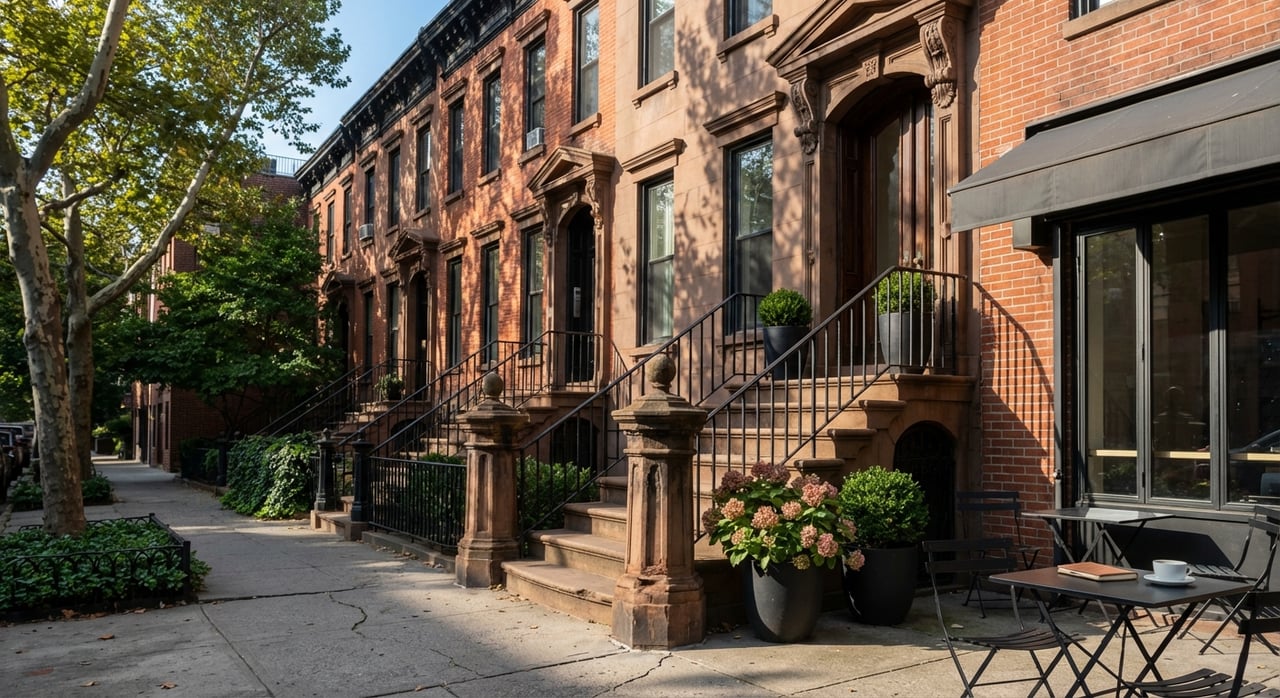
Carroll Gardens sits in northwest Brooklyn, between Cobble Hill, Boerum Hill, Gowanus and Red Hook. Locals know it for rows of 19th-century brownstones set back behind unusually deep front gardens that create a calm, residential street feel. You can read a concise neighborhood history on the Carroll Gardens, Brooklyn page.
A small core was designated the Carroll Gardens Historic District by the NYC Landmarks Preservation Commission in 1973. When accuracy matters, cite LPC, Sept. 25, 1973, and remember the designation covers only a few contiguous block faces, not the entire neighborhood. For official maps and guidance, use the NYC Landmarks Preservation Commission site.
Streets, shops and cafés
Smith and Court Streets
Smith Street and Court Street are the main arteries. Smith leans café-and-bistro with plenty of places for a quick espresso or dinner with friends. Court pairs restaurants with groceries and specialty shops, making weekend errands simple. Henry Street adds quieter local spots and beloved bakeries tucked into residential blocks.
Neighborhood staples to try
Weekend waits are common at the most famous eateries, so plan ahead.
- Lucali on Henry Street is a destination pizzeria and a true neighborhood landmark.
- Frankies 457 Spuntino on Court Street is a long-running Italian favorite with a garden setting.
- Buttermilk Channel on Court Street is known for brunch and comfort classics.
- Legacy Italian grocers and bakeries like Caputo’s and Mazzola add an old-world note to daily life.
Parks and weekly rituals
Carroll Park on Court Street is a social anchor with playgrounds, a tot lot and a war memorial. It is the place you will see in family snapshots and neighborhood event photos. Learn more on the NYC Parks page for Carroll Park.
On Sundays, the Carroll Gardens Greenmarket brings produce, bread and flowers to Carroll Street between Smith and Court. GrowNYC lists the market as year-round with typical hours around 8 a.m. to 2 p.m. Check the official GrowNYC page for current hours and vendors.
Daily rhythm here feels like a village in the city: stroller walks and coffee runs in the morning, short loops to a bakery or market, and dinners along Court or Smith.
Transit and getting around
You have direct subway access via the F and G lines, with Carroll Street and Smith–Ninth Streets as the key stations. The F runs into Manhattan and the G provides crosstown Brooklyn connections. The Smith–Ninth Streets station is a visible elevated landmark.
Short trips are easy on foot or bike, and there is Citi Bike nearby. Parking is limited, so car-dependent buyers should factor that into their plans.
Homes and brownstone basics
What you see on most blocks
Carroll Gardens features two and three-story brownstones and brick rowhouses, primarily in Italianate and Neo-Grec styles. You will see high stoops, ironwork, and fenced front gardens, with small multi-family walk-ups and a few co-ops or condos near the edges. The compact historic blocks are the visual core.
How a brownstone is laid out
A classic brownstone often has:
- A stoop leading to a raised parlor floor with tall windows and high ceilings.
- A garden level with a separate entrance that may serve as an apartment or living space opening to the rear yard.
- Upper floors with bedrooms or additional living areas.
Garden-level apartments can be appealing for easy yard access and fewer stairs. The tradeoff can be lower light if the unit sits partially below grade.
Front gardens explained
Those deep front yards are privately maintained and part of each property’s daily rhythm. They offer space for plantings and a buffer from the street, which adds privacy. Maintenance typically includes seasonal planting, edging, and care for ironwork or fences that frame the garden.
Market snapshot and pricing context
Carroll Gardens is small, so inventory stays tight, and intact brownstones with private outdoor space often command a premium. As a late 2025 snapshot, StreetEasy reported a median asking price in the mid 2 million dollar range and a median asking rent around 4,500 dollars. Redfin’s neighborhood page showed monthly median sale prices broadly in the 2.0 million to 2.7 million dollar band during late 2025. Different data sources track different metrics, so use vendor and date when comparing.
What that means for you: set expectations around pricing and speed. Well-presented homes move quickly, and it helps to be clear on your must-haves versus nice-to-haves before touring.
Renovation and landmark tips
If your home sits inside the LPC historic-district footprint, visible exterior changes generally require approvals. Common examples include replacing windows, altering a stoop, or adding a visible rooftop bulk. Expect extra lead time for permits and design review. Start with the LPC’s Brooklyn historic-district resources for maps and process basics.
Older brownstones also come with maintenance needs. Budget for façade and stoop care, garden-level drainage, and back-of-house systems like electrical, plumbing and HVAC. Cosmetic refreshes can make a home feel new, but structural and systems work drives the long-term comfort and value.
Community and traditions
Carroll Gardens’ Italian-American heritage is still visible in shops, parish life and small shrines tucked into front gardens. Annual religious processions, including a Good Friday walk and the September Feast of Addolorata, bring neighbors and visitors together. You can see details on the Maria S.S. Addolorata site.
Active neighborhood groups have played a role in shaping zoning and design conversations over the years, reflecting how strongly residents care about the look and feel of the streets.
Is Carroll Gardens a fit for you?
Choose Carroll Gardens if you want historic architecture, tree-lined blocks and café culture within easy reach of Manhattan and Brooklyn hubs. You will likely value the quiet, residential feel, the convenience of Smith and Court Streets, and access to Carroll Park and the Greenmarket. The tradeoffs are higher prices, limited parking and the responsibilities that come with older homes.
If you are considering a move, or planning improvements to a property you already own, a calm, step-by-step plan will make the difference. For tailored guidance on buying, selling, renting or valuing a home in Carroll Gardens, connect with Peter Mancini for the team’s Signature Experience.
FAQs
What makes Carroll Gardens distinct in Brooklyn?
- The deep front gardens in front of 19th-century brownstones create a spacious, residential street feel that is rare in the city.
How does the historic district affect renovations in Carroll Gardens?
- Homes inside the LPC district need approvals for visible exterior changes like windows, stoops or rooftop work, which adds time to planning.
Which subway lines serve Carroll Gardens for daily commuting?
- The F and G lines serve the area, with Carroll Street and Smith–Ninth Streets stations offering Manhattan and crosstown Brooklyn connections.
What are current home prices in Carroll Gardens?
- As of late 2025, asking prices hovered in the mid 2 million dollar range and monthly medians for closed sales often ranged from about 2.0 to 2.7 million.
Where do locals gather on weekends in Carroll Gardens?
- Carroll Park and the Sunday Carroll Gardens Greenmarket are central, with dining and café stops along Smith and Court Streets.